
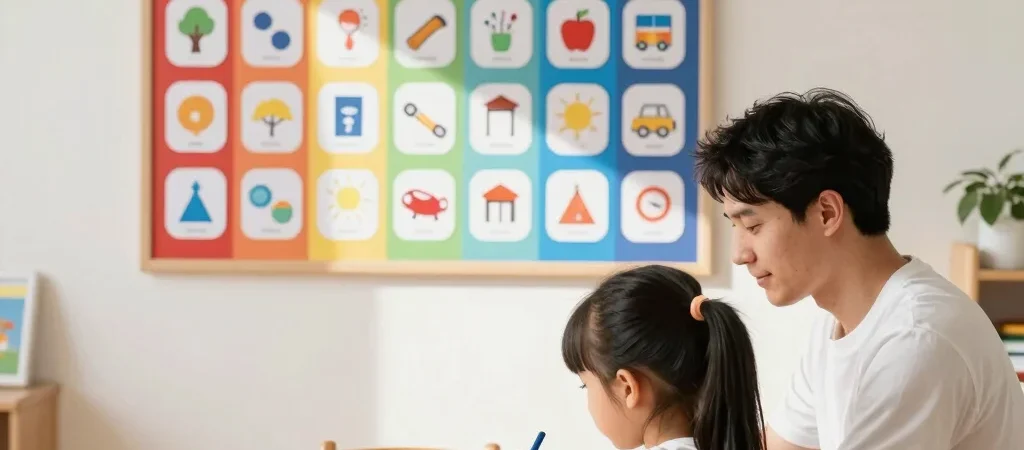
Routine provides predictability, and for children with diverse learning needs, predictability creates a safe foundation for growth. Visual timelines convert abstract time into clear, manageable steps that reduce anxiety and encourage independent action. By pairing simple illustrations or symbols with concise text, parents can make daily transitions significantly smoother.
Choosing Clear High Contrast Symbols
The most effective visual schedules prioritize clarity over complex artistic detail. Use high-contrast color pairings such as dark text on yellow or soft white backgrounds to ensure icons are instantly recognizable from across the room. Grouping activities into distinct color-coded phases helps learners anticipate shifts between study time, creative play, and rest without feeling overwhelmed.
Integrating Video Cues and Tactile Cards
Reinforcing written or drawn cards with audio-visual prompts establishes stronger memory pathways. Displaying a short educational clip right after a schedule card helps young learners link visual cues with real-world tasks. Allowing the child to physically move or flip cards upon completing a task builds self-reliance and a rewarding sense of accomplishment.
Maintaining Flexibility in Daily Schedules
A visual timeline is a supportive tool rather than a rigid set of rules. When unexpected schedule shifts happen, introducing a dedicated pause card teaches adaptive coping skills in a controlled way. Consistent caregiver encouragement paired with a visual schedule ensures every student feels supported every step of the way.